Heating a house has always been about comfort, but comfort means different things to different people. Some homeowners want fast heat. Others care more about steady temperatures, quiet operation, and lower long-term costs. Radiant heating systems appeal to people who value consistent warmth and a cleaner indoor environment.
Radiant heat for house applications works differently from forced air systems. Instead of warming air and pushing it through ducts, radiant heat warms surfaces. Floors, walls, or ceilings gently release heat upward, creating an even temperature across the room. The result feels natural, similar to standing in sunlight on a cool day.
Homeowners often begin researching radiant heat when they are building a new home, planning a remodel, or dealing with uneven temperatures and high energy bills. Understanding how the system works helps explain why it continues to gain popularity.
How Radiant Heating Systems Work
Radiant heating relies on heat transfer through surfaces rather than air movement. The system is installed beneath flooring or within concrete slabs, sometimes inside walls or ceilings depending on the design.
There are two main types of radiant heat systems used in residential settings.
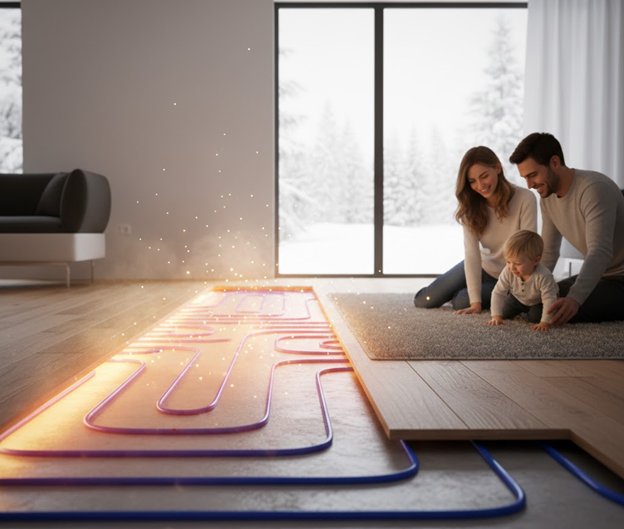
Hydronic radiant heat uses warm water flowing through flexible tubing. A boiler or water heater warms the water, which circulates through loops beneath the floor. As the floor warms, heat rises evenly throughout the room.
Electric radiant heat uses resistance cables or mats installed under the floor surface. When electricity passes through the system, the cables warm and transfer heat upward.
Both approaches deliver steady warmth without drafts, fans, or vents. Hydronic systems are more common for whole-house heating, while electric systems are often used in specific rooms such as bathrooms or kitchens.
Radiant heat for house installations are carefully designed based on floor type, insulation levels, and room layout. Proper design ensures efficient operation and consistent comfort.
Why Floors Play Such an Important Role
Floors are the most common surface used for radiant heating because heat naturally rises. When the floor becomes the heat source, warmth spreads evenly from the ground up.
Tile, stone, and concrete work especially well with radiant systems because they hold and release heat efficiently. Wood and engineered flooring can also be used when properly selected and installed. Carpet may reduce heat transfer, but it can still work with the right system design.
Warm floors change how a space feels. Rooms stay comfortable without hot and cold pockets. Thermostat settings can often be lower while maintaining the same level of comfort, which helps reduce energy use over time.
Comfort Without Noise or Drafts
One of the most noticeable benefits of radiant heating is the absence of noise. There are no fans turning on and off, no air rushing through vents, and no sudden blasts of warm air.
Because radiant heat warms objects rather than air, it avoids the dry feeling often associated with forced air systems. Dust, allergens, and pet dander are not constantly circulated, which can be helpful for people with allergies or respiratory sensitivities.
The warmth feels stable rather than cyclical. Instead of heating up quickly and cooling down just as fast, rooms maintain a consistent temperature throughout the day.
Energy Efficiency and Long-Term Value
Radiant heating systems operate efficiently because they deliver heat directly where it is needed. There is little heat loss through ductwork, and water-based systems can run at lower temperatures while still providing comfort.
Hydronic systems can be powered by various energy sources, including gas boilers, high-efficiency water heaters, solar thermal systems, and heat pumps. This flexibility allows homeowners to choose solutions that align with their energy goals and local utility costs.
While the upfront installation cost of radiant heat for house projects can be higher than traditional systems, many homeowners view it as a long-term investment. Reduced energy use, fewer mechanical components, and lower maintenance needs contribute to lasting value.
Design Flexibility for New Homes and Remodels
Radiant heating works particularly well in new construction because it can be integrated into the design from the beginning. Builders can plan insulation, flooring, and system layout together to achieve optimal performance.
In existing homes, radiant heat can still be added during renovations. Bathrooms, kitchens, basements, and additions are common starting points. These areas benefit from warm floors and are often easier to access during remodeling work.
Each home requires a custom approach. Floor structure, ceiling height, insulation quality, and local climate all influence system design. Working with experienced professionals ensures the system performs as intended for decades.
Maintenance and System Longevity
Radiant heating systems are known for durability. Hydronic tubing is designed to last many years when installed correctly. With fewer moving parts than forced air systems, there is less wear and tear over time.
Routine maintenance typically focuses on the boiler or heat source rather than the tubing itself. Periodic inspections help keep the system running efficiently and identify small issues before they become larger problems.
Homeowners often appreciate the reliability of radiant systems once they are installed. The simplicity of operation adds to peace of mind.
Why Homeowners Choose Radiant Heat
People who choose radiant heating often cite comfort first. Even warmth, warm floors, and quiet operation change how a home feels on a daily basis.
Others are motivated by health concerns, energy efficiency, or long-term cost control. Radiant heat for house use aligns well with modern building practices that emphasize insulation, air sealing, and efficient energy use.
It is not a trend driven by novelty. Radiant heating has been used for centuries in various forms, refined over time with modern materials and engineering.
Working with a Trusted Local Expert
Installing radiant heat requires careful planning and skilled workmanship. System design, heat source selection, and installation quality all affect performance.
Harris-Dudley Co. has extensive experience designing and installing radiant heating systems for homes. Their team understands how to match system design to real-world living conditions, climate demands, and homeowner expectations.
From new construction to renovation projects, their approach focuses on comfort, reliability, and long-term efficiency.
If you are considering radiant heat for your house and want clear guidance from experienced professionals, speak with Harris-Dudley Co. at +1 801-363-3883.
Contact Harris-Dudley Co. today to schedule a consultation and find out if radiant heating is the right solution for your home.